
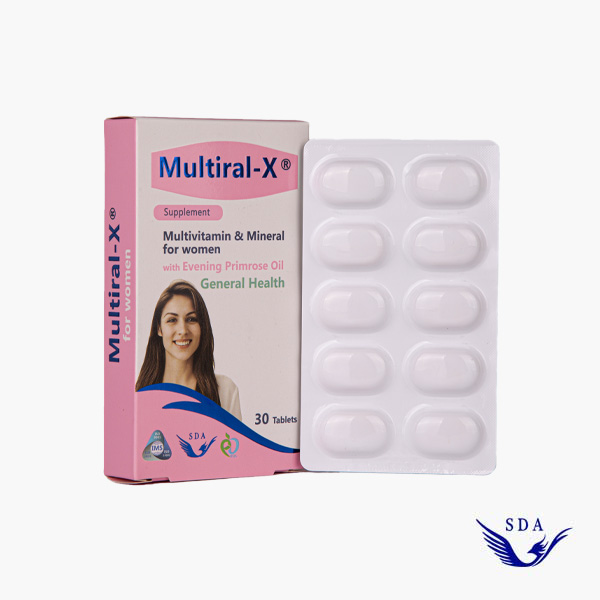
Formulation: Tablet
Packaging: Pack of 30 tablets, divided into 3 blisters of 10 tablets each, with an informational leaflet included in a cardboard box.
Active Ingredients in Multiral-X Tablets by Simorgh Darou
Vitamin D3 (Cholecalciferol): 200 IU
Vitamin E: 45 IU
Vitamin K: 90 mcg
Vitamin C (Ascorbic Acid): 60 mg
Vitamin B1 (Thiamine Mononitrate): 10 mg
Vitamin B6 (Pyridoxine Hydrochloride): 10 mg
Vitamin B12 (Cyanocobalamin): 20 mcg
Vitamin B2 (Riboflavin): 5 mg
Vitamin B3 (Niacinamide): 36 mg
Pantothenic Acid (Calcium Pantothenate): 6 mg
Biotin: 50 mcg
Beta-Carotene: 2 mg
Folic Acid: 400 mcg
Bioflavonoid: 10 mg
Aminobenzoic Acid: 30 mg
Magnesium (Magnesium Oxide): 100 mg
Iron (Ferrous Fumarate): 12 mg
Zinc (Zinc Sulfate): 12 mg
Copper (Copper Sulfate): 1500 mcg
Manganese (Manganese Sulfate): 2.5 mg
Selenium (Sodium Selenite): 100 mcg
Chromium (Chromium Chloride): 50 mcg
Evening Primrose Oil (Oenothera biennis): 100 mg
Borage Oil (Borago): 50 mg
Excipients: Microcrystalline Cellulose, Croscarmellose Sodium, Povidone, Magnesium Stearate.
Indications
To support general health and meet the specific nutritional needs of women.
Dosage and Administration
Take one tablet daily, immediately after or with a main meal, or as directed by a physician.
Precautions and Contraindications
This supplement is not intended for diagnosis, prevention, or treatment of any disease. Consult a physician before use if you have any of the following conditions: hemophilia, renal or hepatic insufficiency, diabetes, epilepsy, cancer, or hyperlipidemia. Discontinue use at least two weeks before surgery. Swallow tablets whole with water or a cold beverage; do not take with tea or coffee.
Potential Adverse Effects
While generally safe, some individuals may experience mild side effects, including esophageal irritation, fatigue, flushing, headache, appetite loss, insomnia, and mild gastrointestinal disturbances. If these occur, consult your healthcare provider.
Drug Interactions
Vitamin B6, B3, and Folic Acid may potentiate effects when used with medications like phenytoin, phenobarbital, and amiodarone.
Vitamins A and E can interact with anticoagulants (e.g., warfarin), increasing the risk of bleeding.
Antibiotics like cephalexin, quinolones (e.g., ciprofloxacin), and tetracyclines (e.g., doxycycline) may interact with the zinc, magnesium, and manganese in this product; maintain a minimum 3-hour interval between doses.
Vitamin D may interact with medications for hypertension and certain diuretics.
Evening Primrose Oil is contraindicated in cases of epilepsy and psychosis.
Avoid use with acne medications containing retinoids.
Pharmacological Effects and Mechanism of Action
Evening Primrose Oil is rich in linoleic and gamma-linolenic acids, essential fatty acids important for cellular membrane function, cholesterol oxidation, and prostaglandin synthesis. It is also beneficial for premenstrual syndrome (PMS) and breast tenderness.
Vitamin B complex supports skin, hair, and nail health, and is crucial for nervous system function.
Beta-Carotene can reduce signs of skin aging, likely through increased collagen production and reduced oxidative damage.
Magnesium is essential for bone health and may alleviate mood changes associated with PMS.
Zinc supports various biological processes, including RNA/DNA synthesis and thyroid function.
Use in Pregnancy and Lactation
Consult a healthcare provider before use during pregnancy and lactation.
Storage Conditions
Store below 30°C, away from light and moisture, and keep out of reach of children.


Reviews
There are no reviews yet.