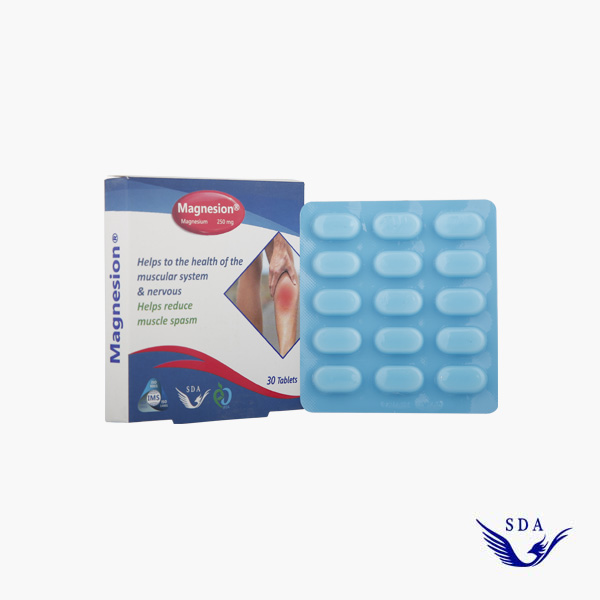
Magnesium Tablets by Simorgh Darou
Composition per Tablet
- Magnesium (as Magnesium Oxide): 294.75 mg
- Other Ingredients: Povidone, Microcrystalline Cellulose, Sodium Croscarmellose, Stearic Acid, Magnesium Stearate
Indications
- Magnesium is beneficial for supporting the health of bones and muscles.
- It plays a crucial role in the maintenance of muscle function and bone health.
Dosage and Administration
- Adults: Take one tablet daily, or as directed by your healthcare provider.
Side Effects
- Magnesium may cause gastrointestinal irritation, nausea, vomiting, or diarrhea when taken orally.
- In rare cases, high doses can lead to hypermagnesemia, with symptoms such as thirst, hypotension, drowsiness, and muscle weakness.
Precautions
- Renal Impairment: Individuals with renal dysfunction should take Magnesium with caution.
- Avoid exceeding the recommended dose.
General Guidelines
- This product has been prescribed for your current condition. Do not share this product with others, and avoid using it for similar conditions without professional advice.
- Before using, consult your healthcare provider if you have allergies to medications, foods, preservatives, or colorants, or if you are using any other dietary supplements or medications.
Drug Interactions
- Bisphosphonates: Magnesium may reduce the absorption of bisphosphonates, thus decreasing their effectiveness.
- Digoxin: Magnesium may lower serum digoxin levels, which could affect its therapeutic effect.
- Potassium-Sparing Diuretics: Diuretics like triamterene and amiloride can interact with magnesium, potentially increasing the risk of hyperkalemia.
- Muscle Relaxants: Magnesium may enhance the effects of skeletal muscle relaxants by decreasing acetylcholine release at nerve terminals.
- Aminoglycoside Antibiotics (e.g., gentamicin, streptomycin) may interact with magnesium, leading to neuromuscular weakness.
- Tetracyclines (e.g., doxycycline, tetracycline) may form insoluble complexes with magnesium, reducing their absorption and antibacterial activity. It is recommended to take Magnesium at least 2 hours before or 4-6 hours after taking these antibiotics.
- Quinolone Antibiotics (e.g., ciprofloxacin, levofloxacin, ofloxacin) may also interact with magnesium, leading to reduced absorption. It is advised to separate the doses by at least 2 hours before or 4-6 hours after taking magnesium.
Mechanism of Action
Magnesium is involved in over 300 biochemical reactions in the body and significantly affects blood pressure, metabolism, immune function, and various other aspects of health. Key biochemical functions regulated by magnesium include protein synthesis, muscle and nerve function, blood sugar control, and blood pressure regulation.
Magnesium is essential for energy production, oxidative phosphorylation, and glycolysis. It also facilitates the active transport of calcium and potassium across cell membranes, a critical process for nerve conduction, muscle contraction, and the natural rhythm of the heart.
The majority of magnesium is stored in the bones, muscles, connective tissues, and body fluids. Magnesium is vital for cardiac and muscle function, and it supports the structure of bones and teeth. It also plays a key role in calcium metabolism.
Deficiency in magnesium can result in fatigue, generalized weakness, and muscle cramps, and may lead to osteoporosis and cardiac arrhythmias, increasing the risk of heart attacks.
Storage Conditions
- Store at below 30°C, in a cool, dry place, away from light and moisture.
- Keep out of reach of children.
اولین نفر امتیاز دهی باشید






Reviews
There are no reviews yet.